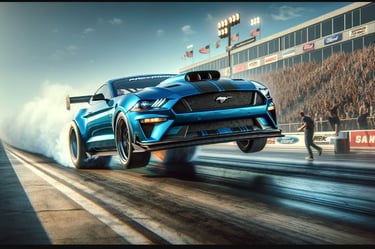
Browse the most up to date, fastest production Corvettes, Mustangs and Camaro's by make, model and modifications on 1/8th mile and 1/4 mile drag strips. Submit your ticket and get listed.
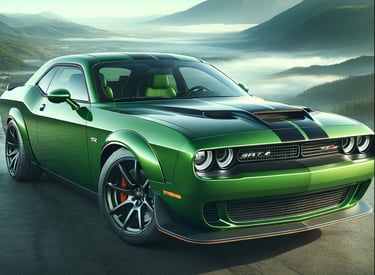
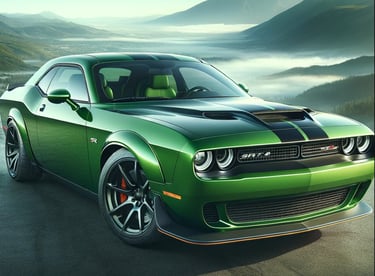
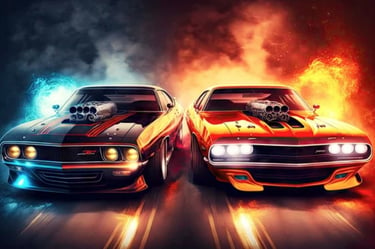
Since its reintroduction in 2008, the third-generation Dodge Challenger has made a significant impact in the muscle car segment, competing fiercely with contemporaries like the Ford Mustang and Chevrolet Camaro. This generation of the Challenger has been celebrated for its retro styling, hefty build, and, most importantly, its performance capabilities that cater to a wide range of preferences, from daily driving comfort to high-octane track performance.
Evolution of Performance (2008-Present)
2008-2014: The Early Years
The rebirth of the Challenger in 2008 was marked by the release of the SRT8 model, equipped with a 6.1L HEMI V8 engine delivering 425 horsepower and 420 lb-ft of torque. This model set the tone for the performance and character of the Challenger lineup, combining muscular power with a throwback design that resonated with enthusiasts and collectors alike.
Over these early years, Dodge expanded the Challenger's range to include more engine options, such as the 3.6L Pentastar V6 for the SXT model, offering a more fuel-efficient yet still spirited driving experience, and the 5.7L HEMI V8 in the R/T, providing a balanced mix of performance and daily drivability.
2015-2020: Raising the Bar
In 2015, Dodge introduced the Challenger SRT Hellcat, revolutionizing the muscle car market with a supercharged 6.2L HEMI V8 engine capable of producing an astonishing 707 horsepower and 650 lb-ft of torque. This model not only shattered performance records for production muscle cars but also underscored Dodge's commitment to high-performance engineering.
Following the Hellcat, the Challenger lineup saw the introduction of the SRT Demon in 2018. With 840 horsepower and 770 lb-ft of torque (on 100 octane fuel), the Demon was designed for drag racing, featuring a wide range of drag-specific components and tuning. It set numerous records, including the fastest quarter-mile time by a production car.
2021-Present: The Modern Era
Continuing its tradition of pushing boundaries, Dodge has kept refining the Challenger's performance. Models like the SRT Hellcat Redeye and the Super Stock have further blurred the lines between street-legal cars and track-focused monsters. The Redeye boasts up to 797 horsepower, while the Super Stock, aimed at dominating the drag strip, provides 807 horsepower.
Performance Characteristics
Across its range, the third-generation Challenger has been praised for its straight-line speed, especially in its V8-powered models. Despite its heft, Dodge has made strides in improving its handling and braking, particularly in models equipped with performance packages and widebody kits. Yet, it's the car's ability to offer a range of performance options—from the relatively tame V6 models to the extreme Hellcat and Demon variants—that truly stands out.
Conclusion
The third-generation Dodge Challenger, since its reintroduction in 2008, has continuously evolved, offering something for everyone, from daily drivers to speed enthusiasts. Its blend of classic muscle car aesthetics with modern performance engineering keeps it competitive in today's market. As it stands, the Challenger remains a testament to American muscle car heritage, embracing its past while accelerating into the future with tire-smoking fervor.
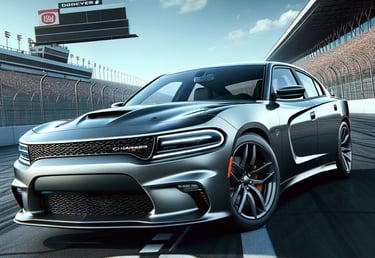
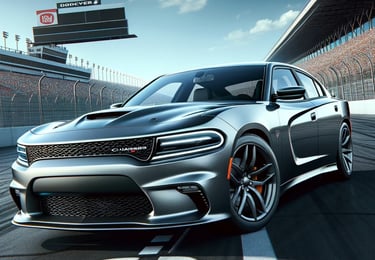
The Dodge Charger, an iconic nameplate in American automotive history, has undergone significant evolution across its sixth, seventh, and eighth generations. This progression has seen the Charger transform from a large family sedan with performance underpinnings to a modern muscle car that embodies power, technology, and versatility. The comparison of these three generations reveals Dodge's commitment to improving performance while maintaining the Charger's identity as a spacious, comfortable, and powerful sedan.
Sixth Generation (2006-2010)
Reintroduced in 2006 after a long hiatus, the sixth-generation Charger marked Dodge's reentry into the rear-wheel-drive performance sedan market. It was built on the Chrysler LX platform, shared with the Chrysler 300 and Dodge Magnum, offering a solid foundation for performance and handling improvements.
Performance Highlights:
- Engines: Ranging from a 2.7L V6 producing 178 horsepower to a 6.1L HEMI V8 in the SRT8 model, pushing out 425 horsepower.
- Handling: While it was more of a cruiser than a sharp sports sedan, the SRT8 model offered improved suspension, brakes, and steering for a more engaging driving experience.
Seventh Generation (2011-2020)
The seventh-generation Charger underwent a comprehensive redesign, incorporating more aggressive styling, improved interior quality, and significant performance enhancements. This era saw the introduction of new technology and more powerful engine options, reflecting the evolution of the Charger into a modern muscle sedan.
Performance Highlights:
- Engines: The introduction of the 3.6L Pentastar V6 and the 5.7L HEMI V8 offered a good balance of power and efficiency. The 6.4L HEMI V8 in the SRT 392 models and the supercharged 6.2L HEMI V8 in the Hellcat version, with 707 horsepower, pushed the boundaries of sedan performance.
- Handling and Technology: Improved suspension systems, adaptive damping, and performance-oriented technologies like launch control and line lock enhanced the Charger's capabilities on and off the track.
Eighth Generation (2021-Present)
While technically not recognized as a new generation by Dodge, the Charger from 2021 onwards continues to build on the seventh-generation platform with updates to technology, performance variants, and special editions. The line between generations might blur, but the continuous improvements keep the Charger relevant in the evolving automotive landscape.
Performance Highlights:
- Engines: The lineup continues with the robust 3.6L V6, 5.7L HEMI V8, 6.4L HEMI V8, and the monstrous 6.2L supercharged HEMI V8 in the Hellcat and Redeye editions, the latter offering up to 797 horsepower.
- Handling and Technology: Dodge has further refined the Charger's driving dynamics with even more advanced suspension systems, aerodynamic enhancements, and driver-assistance technologies. The Charger remains a leader in integrating performance with daily usability.
Comparison and Conclusion
The evolution from the sixth to the "eighth" generation of the Dodge Charger showcases Dodge's ability to adapt and innovate within the performance sedan segment. Each generation has built upon the strengths of its predecessors, with substantial improvements in power, handling, and technology.
The sixth generation reestablished the Charger as a performance contender. The seventh generation refined the formula, significantly enhancing power and introducing cutting-edge technology. The latest iteration of the Charger, while not a full generational leap, continues to push the envelope with even more powerful engines and sophisticated driving aids, solidifying its place as a top choice for those seeking a muscle car with four-door practicality.
In summary, Dodge has successfully maintained the Charger's appeal through continuous innovation, ensuring that it remains not only a symbol of American muscle but also a competitive, modern performance sedan capable of satisfying a broad spectrum of driving enthusiasts.